
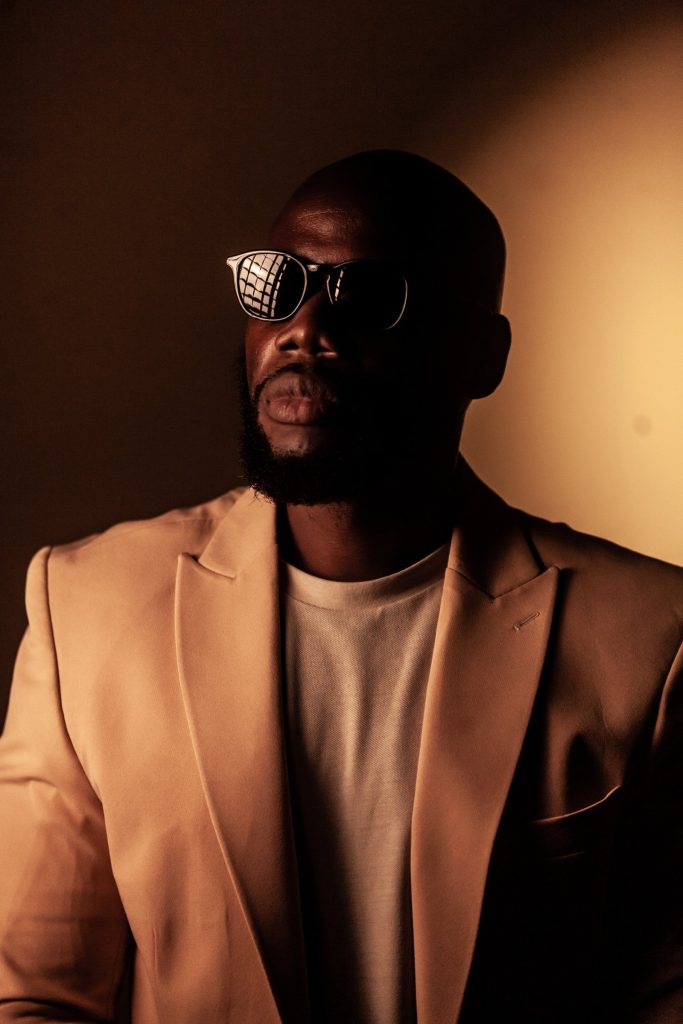
AMBRA RADIO | ARTIST PORTRAIT
PARAMARIBO – Sometimes an artist thinks his story is over. The studio is left behind, the microphone is put away, and other ambitions take over. For Garry Waterberg, known to the public as P_ton, Pton, P or Underscore, music at some point seemed to be exactly that kind of closed chapter. Until life forced him to rethink what truly matters.
His album BDAY, released on 25 September 2026 and accompanied by three new music videos, is therefore more than a musical comeback. It is the result of disappointment, personal growth and a profound period in which Waterberg learned to look at his life anew. The message that came out of it is simple but telling: as long as you are alive, there is something to celebrate.
From a front room to a sound of his own
Waterberg was born in Paramaribo and grew up in an environment where music, rap and street culture were never far away. Around the age of twelve he discovered that rhyming could be more than a game with words. His brother Errol, who listened to hip-hop and rapped himself, played an important role. Friends and local artists encouraged him as well. At home, the sounds of Papa Touwtjie, Basja Ranki and GT Connection filled the house, while internationally he looked up to names such as 2Pac, Snoop Dogg, Jay-Z and DMX.
His first steps were anything but glamorous. Together with his neighbour Gio, he recorded tracks in a front room, without professional equipment or a real studio. The recordings were primitive, but the reactions from the neighbourhood were enthusiastic. That proved to be fuel enough to keep going. Street rap battles, in which he regularly came out on top, helped him develop his timing, his confidence and his own style.
One of his first songs was “Je Bent Aan Top”. Around 2010 he released about six singles, intended as part of an EP that never ended up appearing as a complete project. It was an early lesson in the distance between ambition and execution, a distance that would later play a role in his story again.
When passion starts to feel like a burden
The road of an independent artist demands more than talent. It takes discipline, motivation, money and the willingness to keep investing, time after time, without any guarantee of results. For Waterberg, it was precisely these obstacles that grew heavier and heavier. Some of the goals he had set for himself as a solo artist remained out of reach. Music, once a natural part of his life, began to feel like time and energy he might be better off investing elsewhere.
He turned his attention to personal development, entrepreneurship and his career outside of music. In daily life he runs a VIP department at the airport. His focus shifted: books on business and self-development changed the way he thought, and rapping faded into the background. He really did stop.
But a passion cannot always be closed for good. During the coronavirus period, Waterberg became seriously ill. He describes that experience as a moment when he truly thought he might not make it. After his recovery, he looked at his life differently. It felt like a second chance, and with that chance, unfinished dreams came back into view.
“Rapping wasn’t done with me yet”
His return to music did not come from a need to simply take part again. Waterberg realised he had not yet told his own story in full. In the past he made music because everyone around him was doing it and it was part of the lifestyle. Now he wants to choose more consciously: “every track has to express something, capture an experience or encourage someone.”
“I thought I was done with rapping, but apparently rapping wasn’t done with me” is the thought that sums up his comeback. Outside of music he describes himself as quiet, “calm, cool and collected”. Behind the microphone, a different side emerges. There he finds room for feelings and subjects that he cannot always put into words so easily in an ordinary conversation.
His lyrics often arise from real events, personal experiences and situations that people recognise from daily life. He writes his own lyrics and moves musically between energetic, sometimes aggressive tracks and calmer, smoother songs. Dutch is his most comfortable language, but Sranantongo and English are also part of his repertoire.
BDAY: not just a birthday
The title of his new album may sound like an invitation to a party, but its meaning runs deeper. BDAY is about gratitude, about the realisation that a new morning, good health, the presence of loved ones and something to eat or drink are not to be taken for granted. In Waterberg’s words: “Alla Dey Na Mi Bday”, every day is my birthday.
That idea does not make the album a denial of hardship. On the contrary, the message gains weight precisely because it exists alongside disappointments and heavy periods. Waterberg compares life to a DJ who constantly plays different tracks and mixes. Sometimes something cheerful comes on, sometimes a track you would rather skip. Still, you have to keep dancing and carry on, even when it rains.
For the production, he took his lyrics to engineer Cegan, while Fib provided the beats. The visuals were created by video director Directa. The project was deliberately approached in a professional way, with room to experiment and to take the quality to a higher level. Waterberg’s clothing line can also be seen in several of the music videos, so music and visuals double as a showcase for his entrepreneurship and brand development.
In total, six music videos were made this year, and the three new clips were released together with the album. They can be watched on his YouTube channel, P_tonMusic. The combination of music, visual presentation and personal branding shows that Waterberg’s ambitions reach further than just the next release.
From local stages to a bigger legacy
Waterberg also knows the thrill of a crowd that goes along completely. He recalls, among other things, the Fouradi Concert, where his group got the audience so fired up that the organisers wondered how the headline act could possibly top it. Performances around the Discriminatie Loop and New Year’s Eve at Galaxy have also stayed with him. Musically, he has worked with artists such as Koyeba, Lodiliki, Poppe, Ta2, Enver and Donavey.
With the group TIK, he says, he made an outspoken political rap track that addressed subjects others preferred to avoid. The project drew international attention: the Dutch network BNN travelled to Suriname to interview the group. Moments like these confirmed for him what music can do when artists dare to speak and use their own voice.
Still, he does not see his career as a story that revolves only around highlights. The setbacks, the unfinished EP, the period in which he quit and the lessons he drew from it are just as much a part of it. Constructive criticism can help him move forward, while demeaning reactions he tries not to let determine his direction. His advice to emerging creators is practical: work on yourself first, invest in your skills, and approach others not just with ideas but with concrete work that shows what you can do.
A platform for the next generation
Waterberg now looks beyond his own catalogue. He wants to release an album every year from now on and build a solid body of work. He also dreams of a platform for young people who want to develop creatively, with guidance in music, performing arts, presentation and performance. The goal is not only to discover talent but to help it grow into something that can be presented professionally.
His clothing line, too, should grow into a recognisable brand. An international breakthrough remains an ambition, as do performing on big stages and collaborating with artists from different markets. He wants to experiment with hip-hop, amapiano, dancehall and soca, and he is also exploring ways to connect Surinamese traditions such as kaseko and kawina with a fresh sound. Not to simply copy existing styles, but to create something recognisable and distinctly his own.
A call to the Surinamese public
At the end of his story, Waterberg addresses the public directly. In his view, Suriname has a lot of talent, but artists also need support from the people they make music for. A like, a subscription, a comment or sharing a song may seem small, but it can help make local talent more visible.
His call is clear: “support Surinamese artists with the same energy with which foreign artists are supported.” It is not a request for uncritical applause, but for a fair chance for creators to have their work heard and to keep growing.
With BDAY, P_ton presents himself as an artist who is not going back to the past but looking ahead with new conviction. He wants to make music with a message, build a brand and ultimately leave behind something bigger than himself. His story is a reminder that a comeback does not always begin with a big announcement. Sometimes it begins with recovery, a different view of life and the decision to finish an unfinished story after all.
“Alla Dey Na Mi Bday!”
Follow P_ton
Listen to BDAY on the music platforms where P_ton makes his music available, and watch the music videos on YouTube. Performances and activities for November and December 2026 will be announced at a later date.